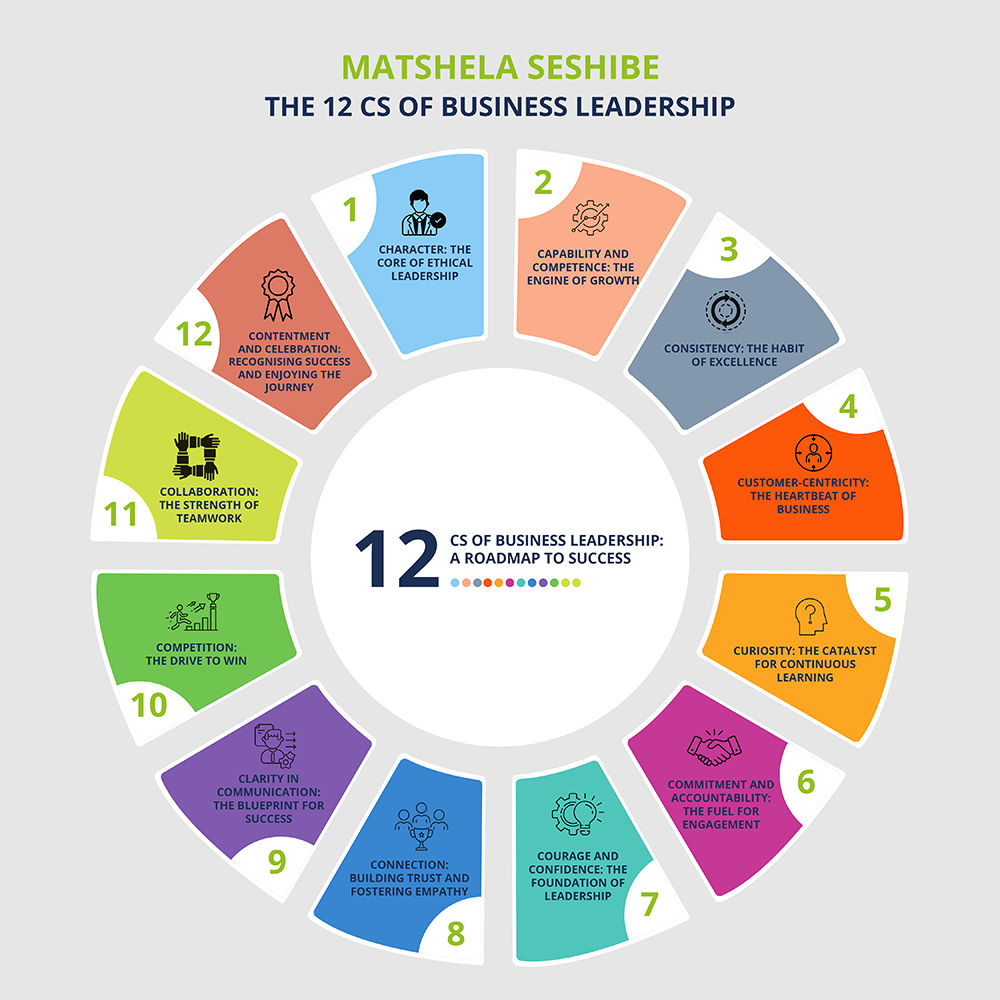
Leadership does not have a one-size-fits-all formula, but through my experience, I’ve identified 12 guiding principles – the 12 Cs of Business Leadership – that offer leadership essentials for organisations to thrive in today’s competitive market. These 12 principles provide a solid framework for effective leadership. They are:
1. Character and Ethics
The Leader sets the tone for the whole business. To do that effectively he/she must be guided by ethics and fundamental values. Ethical leadership is about more than just avoiding wrongdoing. It’s about actively promoting positive values, fostering trust, and creating a culture of integrity. Ethical leaders inspire their teams to do their best and build a reputation for fairness and honesty. “Integrity is doing the right thing, even when no one is watching.” – C.S. Lewis
2. Customer-Centricity
A business exists to create a customer and serve them with excellence. In each endeavour leaders must understand this purpose and make their offerings relevant to their customer. Customer-centricity goes beyond simply providing good service. It involves understanding your customers’ needs on a deep level, anticipating their future requirements, and continuously striving to exceed their expectations. By putting customers at the heart of everything you do, you build loyalty, drive growth, and create a sustainable business. “The most important single thing is to focus obsessively on the customer.” – Jeff Bezos
3. Curiosity
Curiosity is the fuel that drives innovation and keeps leaders ahead of the curve. By staying curious, leaders are better able to identify emerging trends, spot opportunities, and adapt to change. A curious mindset also fosters a culture of learning and continuous improvement. “The important thing is not to stop questioning.” – Albert Einstein
4. Connectedness
Ultimately, business is about people and relationships. The key ingredient that oils value creation among all stakeholders is trust. Building trust and fostering empathy with your team, stakeholders, and customers is essential for creating a strong and cohesive organization. By connecting with people on a personal level, you can build relationships, inspire loyalty, and create a sense of shared purpose.
5. Clarity in Communication
Leaders are tasked with crafting the business mission, vision, strategies and goals. All require good communication to translate into execution. Effective communication is essential for aligning teams, driving focus, and ensuring that everyone is working towards the same goals. Leaders must be able to articulate their vision clearly, set achievable goals, and provide ongoing feedback and support. By fostering a culture of open and honest communication, leaders can build trust, increase employee engagement, and improve overall performance.
6. Capability and Competence
A business is only as strong as its people. Investing in your team’s development is essential for building a high-performing organization. By hiring the best talent, providing opportunities for growth, and empowering employees to do their best work, you can create a culture of innovation, excellence, and continuous improvement.
7. Commitment and Accountability
Leaders must be committed to their organization’s success and hold themselves and their team members accountable for achieving their goals. By setting clear expectations, providing support and guidance, and fostering a culture of accountability, leaders can create a sense of ownership, drive performance, and ensure that everyone is pulling their weight.
8. Courage and Confidence
Leaders need both courage and confidence to make bold decisions, confront challenges, and inspire their teams. Courage is about overcoming fear and taking risks, while confidence is about believing in yourself and your abilities. By developing courage and confidence, leaders can create a positive and empowering environment where their team members feel motivated and inspired to achieve great things. “Courage is not the absence of fear, but the triumph over it.” – Nelson Mandela
9. Collaboration
Effective teamwork is essential for driving innovation, improving efficiency, and achieving superior results. By fostering a culture of collaboration, leaders can encourage their team members to work together, share ideas, and support each other. Collaboration also helps to build trust, improve morale, and create a more positive and productive work environment.
10. Competition
Out in the marketplace teams must play to win. Healthy competition can be a powerful motivator for individuals and teams. By encouraging a competitive spirit, leaders can help their team members to strive for excellence, push the boundaries of their abilities, and stay ahead of the competition. However, it’s important to ensure that competition is fair and constructive, and that it doesn’t lead to unhealthy rivalries or a toxic work environment.
11. Consistency
Consistency is essential for building a strong and sustainable business. By maintaining a consistent approach to your work, you can build trust with your customers, employees, and stakeholders, and create a reputation for reliability and quality. Consistency also helps to create a more predictable and stable environment, which can reduce stress and improve morale. “Excellence is a habit” – Aristotle
12. Celebration
Celebrating successes, both big and small, is important for fostering a positive and motivating work environment. By recognizing and rewarding your team members’ achievements, you can boost morale, improve job satisfaction, and create a sense of camaraderie and belonging. Celebrating also helps to create a culture of appreciation and gratitude, which can lead to increased employee engagement and loyalty.
By embracing these 12 Cs, leaders can inspire their teams, foster trust, and create a culture of sustainable excellence. What leadership principles do you follow? Let’s discuss this in the comments.